1e alinea column: Toekomstscenario’s 2020. Mijn conclusie is dus dat het alle kanten op kan gaan op weg naar 2020. Ik zie vier scenario’s voor me rond deze transitie, die ik kort heb samengevat in onderstaande tabel.
LINK
Carnival Futures: Notting Hill Carnival 2020 is a King’s Cultural Institute project led by Nicole Ferdinand (Culture, Media and Creative Industries at King’s College London) which sought to engage cultural organisations and other stakeholders in planning for the future of the Notting Hill Carnival. The content of this report is intended as a contribution to current research and to identifying future directions for the development of the Notting Hill Carnival. The material and views expressed are produced by various stakeholders in a series of workshops.
DOCUMENT
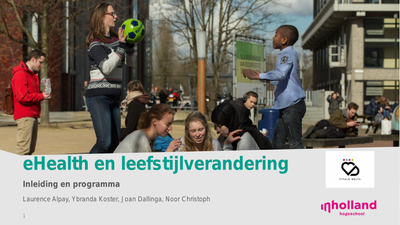
Het vakgebied van de persuasieve technologie richt zich op design, ontwikkeling en evaluatie van interactieve technologieën die bedoeld zijn om de houding of het gedrag van de patiënt/ cliënt te veranderen door middel van overtuiging en sociale invloed. Het is bij uitstek een interdisciplinair onderzoeksgebied waar psychologie, mens-computer interactie en vakgebieden uit zorg en welzijn samen opereren. Het doel van de workshop was om gezamenlijk te verkennen hoe impactmeting van persuasieve technologie uitgevoerd kan worden.
DOCUMENT
This article presents a critical examination of European policy in relation to gamification. We begin by describing how gamification “traveled” as an idea, evolving from controversial yet persuasive buzzword to legitimate policy priority. We then focus on how gamification was represented in Horizon 2020: the flagship European Research & Development program from 2014 to 2020, worth nearly €80 billion of funding. The article argues that the ethically problematic aspects of gamification were removed through a process of policy capture that involved its assimilation in an established European network of research and small and medium enterprise (SME) actors. This process of “ethical neutering” is also observable in the actual funding calls, where the problematic assumptions of gamification around agency and manipulation are made invisible through a superficial commitment to vague and ill-defined criteria of responsible research and innovation.
LINK
This is a revised PAPAI (Personal Adapted Physical Activity Instructor) handbook 2020, part of the Sport Empowers Disabled Youth 2 (SEDY2) project. The original handbook of the PAPAI project, based on Finnish pilot-phase experiences, was written in 2016 by Aija Saari and Heidi Skantz. This revised (2020) PAPAI handbook contains updated materials and lessons learned by the Finnish Paralympic Committee and Inholland University during 2017-2020.
DOCUMENT

Presentation on Etmaal 2020 about patient practitioner interaction in health communication. "Etmaal van de Communicatiewetenschap" is the annual conference for all communciation science scolars in the Netherlands, Flanders, and beyond. On the 6th and 7th of February 2020 it was hosted by the Amsterdam School of Communication Research (ASCoR) at the University of Amsterdam.
DOCUMENT

De bundel met Topartikelen van 2020 is de tiende (en laatste) in de succesvolle reeks met winnende artikelen van de jaarlijkse artikelen-wedstrijd van vierdejaarsstudenten van de sociale opleidingen van Hogeschool Utrecht (HU). Het schrijven van een artikel blijft een goede manier om te reflecteren op de beroepspraktijk, om te onderzoeken, vragen te stellen en te innoveren. In een artikel kan kennis uit de praktijk van alledag worden verrijkt met inzichten uit de theorie. Zo ontstaan nieuwe visies op het beroep, waarmee professionals en hun beroepsgenoten de praktijk van morgen het hoofd kunnen blijven bieden. De winnaars 2020 zijn voor SPH: Eerste prijs: Manon Berndsen met "Opgebrand? Je bent pas net begonnen!" Tweede prijs: Yaël de Kruijf met "De hoop in uitzichtloosheid" Bij MWD gaat de eerste prijs naar Kim de Graaf met "Normalisering van drugsgebruik onder jongeren"
DOCUMENT
The case studies upon which this chapter was built were predominantly written during 2020, based upon the Rubin and Guth survey data drawn from the 2018–2019 university academic year and additional data provided by the six case study contributors in 2020. Our analysis began during the latter part of 2020 and was completed by mid-2021, while the effects of the pandemic on the growth of COIL were becoming increasingly evident. We have updated the course number data through the academic year 2020–2021 for the cases presented. Additionally, there are sidebars from some of the contributors discussing what took place at their institution since the COVID-19 pandemic struck.
DOCUMENT
The Sport Empowers Disabled Youth 2 (SEDY2) project encourages inclusion and equal opportunities in sport for youth with a disability by raising their sports and exercise participation in inclusive settings. It was important to ensure that the authentic views, wishes and feelings of youth with a disability regarding inclusion in sport were attained. Therefore, online focus groups were conducted with youth with a disability, their parents and sport professionals in Finland, Lithuania, Portugal and The Netherlands. During the online EUCAPA 2020 conference the preliminary results of these focus groups were presented.
DOCUMENT

Dit rapport is de eerste editie van de monitor Staat van de Haagse Economie. Deze monitor volgt de economische welvaart van Den Haag: de economische groei van bedrijven en het werk en inkomen van bewoners. Het beschrijft ook de stand van zaken van de vier pijlers die aan deze welvaart ten grondslag liggen: de attractiviteit van de stad, de economische structuur, het ondernemingsklimaat en de ruimte voor bedrijvigheid. Den Haag heeft in 2020 voor zichzelf een ambitieuze doelstelling geformuleerd voor 2030. Den Haag wil: ● een brede economische bloei realiseren; ● een attractieve stad zijn om te wonen, zich te vestigen en te bezoeken; ● een economie hebben met een veerkrachtige structuur; ● een excellent ondernemingsklimaat hebben; ● en voldoende ruimte hebben voor bedrijvigheid. De monitor Staat van de Haagse Economie 2020 moet gezien worden als een nulmeting voor het te voeren beleid dat deze visie moet verwerkelijken. Volgende monitors laten zien of het op deze gebieden de goede kant op gaat en of Den Haag op weg is om de ambities voor 2030 te realiseren. Hoe staan de Haagse economie en de onderliggende vier pijlers er in 2019 en in de eerste helft van 2020 voor? Wat zijn de ontwikkelingen geweest in de afgelopen jaren — met als focus de periode na de banken- en eurocrisis tussen 2014 en 2019 — en hoe steekt Den Haag af ten opzichte van de andere drie grote steden? In deze samenvatting maken we de balans op en kijken daarbij naar de sterke elementen in de Haagse economie en welke elementen aandacht nodig hebben. We gaan daarbij achtereenvolgens in op de staat van de economie en de vier pijlers: stad, structuur, ondernemingsklimaat en ruimte. We sluiten af met een duiding van de bevindingen.
DOCUMENT