Bij de Europese verkiezingen van 2019 werden namens Nederland nooit eerder zoveel eurosceptische Europarlementariërs verkozen. Hun geluid is voor kiezers van grote waarde: Europarlementariërs van middenpartijen hebben de neiging te praten over beleidsmatige details. Eurosceptici lichten eerder de grote keuzes in Brussel uit: moet er meer of minder Europese grensbewaking komen? Is Covid-19 een reden om de binnengrenzen te sluiten? Moet er verdere EU i-uitbreiding plaatsvinden? Moet de EU grote techbedrijven aanpakken? Voor herkenbare politiek zijn herkenbare partijen nodig en dat is waar het – nog geen twee jaar na de Europese verkiezingen – totaal misgaat. Bijna al deze Europarlementariërs, behalve die van SGP i en PVV i, zijn inmiddels van partij gewisseld. Op lokaal niveau waren afsplitsingen al een vertrouwd fenomeen, maar nu doet dit zich ook regelmatig in Brussel voor. Het komt de herkenbaarheid van Europese politiek niet ten goede. Laten we kijken naar drie gevallen: Dorien Rookmaker i stapte uit Forum voor Democratie i (FvD), Toine Manders i vertrok bij 50Plus i en onlangs vertrokken nog eens drie FvD-Europarlementariërs. Waar leidt dit toe?
MULTIFILE

Lecture about the regional dimension in the political, economic and social construction of Europe.
DOCUMENT

Most European countries have to find a delicate balance between long term economic reform and short term impact on GDP.
DOCUMENT

geen samenvatting
DOCUMENT
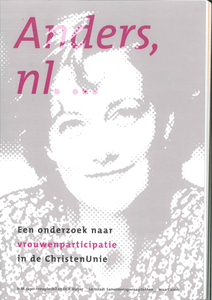
Onderzoek van het Lectoraat Samenlevingsvraagstukken van de Gereformeerde Hogeschool waarin een antwoord wordt gezocht op de vraag: Welke factoren stimuleren en belemmeren vrouwen binnen de ChristenUnie om a) politiek actief te willen zijn (motivatie), en b) daadwerkelijk politiek actief te worden?
DOCUMENT
‘The fear of crime’ is “upon everybody’s tongue” nowadays (Farrall & Gadd 2004:1). The concept is widely accepted as social problem across the globe (Gray, Jackson & Farrall 2008, Garland 2001) as it is held to impinge ‘(…) upon the well-being of a large proportion of the population’ (Farralll et al. 1997:658). But do we actually have a valid picture of a genuine ‘social problem of striking dimensions’ (Ditton 1999:83)? Critical voices say we don’t. ‘The fear of crime’ - as we generally know it - is seen by them as ‘(…) a product of the way it has been researched rather than the way it is’ (Farrall et al. 1997:658). And still, 45 years after the start of research, ‘surprisingly little can be said conclusively about the fear of crime‘ (Ditton & Farrall 2000:xxi). This research contributes to a growing body of knowledge - from especially the last fifteen years - that treats ‘the fear of crime’ as ‘(…) a complex allocation of interacting feelings, perceptions, emotions, values and judgments on the personal as well as the societal level’ (Pleysier 2010:43). One often replicated and paradoxical observation catches the eye: citizens perceive a growing threat of crime to their society, but consequently perceive a low risk that they themselves will fall victim of crime. Taking a social psychological approach (e.g. see Farrall et al. 2000; Jackson 2008), we will search for suitable explanations for this paradoxical observation in the fear of crime’s research tradition. The aim of this research is ‘to integrate social psychological concepts related to the individual’s identity and evaluation of his position in an increasingly complex society, to enhance our understanding of the fear of crime concept’ (Pleysier & Cops 2016:3).
MULTIFILE

Presentation at the ALM28 Conference: Numeracy and Vulnerability, 5-7 july, Universität Hamburg, Germany.
LINK




