Toerisme is de afgelopen jaren zeer snel gegroeid en deze toename lijkt alleen maar sterker te worden. Hoewel deze ontwikkeling kan bijdragen aan economische groei, brengt ze ook nadelen met zich mee, vaak als overtoerisme aangeduid. Het project Smart City Hospitality heeft de stedelijke toerismeproblematiek geanalyseerd en een serious game ontwikkeld om belanghebbenden samen te laten refl ecteren. Gezamenlijke beleidsontwikkeling is nodig, maar is een proces van lange adem aangezien mensen snel terug lijken te vallen in oude patronen.
DOCUMENT
Purpose – The hospitality industry creates a distinctive context in which learning takes place. The industry’s international perspective and large globalisation play an important role in learning, as well as the operational and structural features that give meaning to learning and development in the hospitality industry. This explorative research therefore studies the relation between workplace learning and organisational performance in the Dutch hospitality industry. Design/methodology/approach – The qualitative research is done through 15 in-depth interviews with general managers and HR managers of Dutch hotels with three or more stars and at least ten employees. Findings – It can be concluded that there is a relation between workplace learning and organisational performance in the hospitality industry, as the participants in this research and the literature both mention workplace learning enhances organisational performance. Originality/value – Little research has been done on learning and organisational performance specifically, in the (Western) hospitality industry. This research therefore focusses on HRD and studies the influence of workplace learning on organisational performance in the Dutch hospitality industry.
DOCUMENT

Change has become continuous, and innovation is a primary approach for hospitality, i.e., hotel companies, to become or remain economically viable and sustainable. An increasing number of management researchers are paying more attention to workplace rather than technological innovation. This study investigates workplace innovation in the Dutch hotel industry, in three- and four-star hotels in the Netherlands, by comparing them to other industries. Two samples were questioned using the Workplace Innovation survey created by the Dutch Network of Social Innovation (NSI). The first was conducted in the hospitality industry, and these data were compared with data collected in a sample of other industries. Results suggest that greater strategic orientation on workplace innovation and talent development has a positive influence on four factors of organizational performance. Greater internal rates of change, the ability to self-organize, and investment in knowledge also had positive influences on three of the factors—growth in revenue, sustainability, and absenteeism. Results also suggest that the hospitality industry has lower workplace innovation than other industries. However, no recent research has assessed to what degree the hospitality industry fosters workplace innovation, especially in the Netherlands. Next to that, only few studies have examined management in the Dutch hotel industry, how workplace innovation is used there, and whether it improves practices.
DOCUMENT

DOCUMENT
This paper introduces the Smart City Hospitality Framework, which could serve as the foundation for a destination-design-driven approach to urban tourism governance and dealing with overtourism issues. This conceptual framework is purposely designed to stimulate collaborative (informed) reflections on overtourism and urban tourism development that could support system analyses, problem structuring and development of transition agendas and pathways within the context of turning urban tourism into a transition arena that contributes to setting in motion a sustainability transition at city level. It merges the dimensions of sustainable development (environmentally responsible and equitable economic development) and city hospitality (the extent to which the city acts as a good ‘host’ to all its ‘guests’, including residents and businesses). Resilience resides at its centre to highlight the temporal aspects of these dimensions, and their interdependencies. To show how this framework can serve as the foundation for destination design efforts in practice, a short description of (experiences with) serious game-playing sessions that employ its logic in six European cities is provided.
LINK
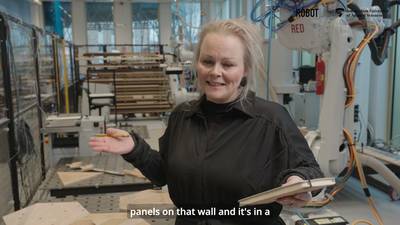
How can a smart ‘upcycle wood factory’ (powered by industry 4.0 technologies and principles) help create meaningful and viable applications out of residual wood applicable to the hospitality sector?This video gives the answers.
YOUTUBE
The role of smart cities in order to improve older people’s quality of life, sustainability and opportunities, accessibility, mobility, and connectivity is increasing and acknowledged in public policy and private sector strategies in countries all over the world. Smart cities are one of the technological-driven initiatives that may help create an age-friendly city. Few research studies have analysed emerging countries in terms of their national strategies on smart or age-friendly cities. In this study, Romania which is predicted to become one of the most ageing countries in the European Union is used as a case study. Through document analysis, current initiatives at the local, regional, and national level addressing the issue of smart and age-friendly cities in Romania are investigated. In addition, a case study is presented to indicate possible ways of the smart cities initiatives to target and involve older adults. The role of different stakeholders is analysed in terms of whether initiatives are fragmentary or sustainable over time, and the importance of some key factors, such as private–public partnerships and transnational bodies. The results are discussed revealing the particularities of the smart cities initiatives in Romania in the time frame 2012–2020, which to date, have limited connection to the age-friendly cities agenda. Based on the findings, a set of recommendations are formulated to move the agenda forward. CC-BY Original article: https://doi.org/10.3390/ijerph17145202 (This article belongs to the Special Issue Feature Papers "Age-Friendly Cities & Communities: State of the Art and Future Perspectives") https://www.dehaagsehogeschool.nl/onderzoek/lectoraten/details/urban-ageing#over-het-lectoraat
MULTIFILE




