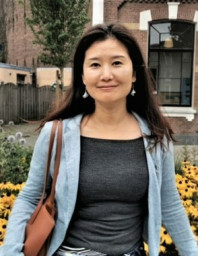
Lily Sprangers is manager van het Leiden Asia Centre. Tijdens dit gesprek met Mendeltje van Keulen en Ruud Schapenk op de Haagse Hogeschool vertelt zij over de Chinese strategie om invloed te krijgen in de wereld. Hoe moeten we ons als Europa positioneren om relevant te blijven in de Aziatische eeuw? Lily vertelt het ons!
MULTIFILE
How do policy analysts perceive the various roles that Models, Simulations and Games (MSG) have, or can have in Integrated Water Resources Management (IWRM)? Fifty-five policy analysts in water management in The Netherlands and China were interviewed, following the procedure of the Q-method. Comparative analysis of the combined quantitative and qualitative data show that: (1) The debate on the role of MSG for IWRM is structured around five frames in The Netherlands and three frames in China. (2) The frames in The Netherlands and China are significantly different. (3) In China, there is a predominant frame that perceives MSG for IWRM as data driven simulation technology for rationalization of water management, which is less significant in The Netherlands. (4) The reverse is true with regard to MSG for stakeholder interaction, learning and integrated assessment, which are significant frames in The Netherlands, but not in China. The conclusion is that frame differences can easily confuse professional and academic debate about MSG for water management; within the same institutional and cultural context, but even more so in Netherlands-China co-operation projects. Frames are also relevant when designing, using or evaluating innovative methods for integrated water resources management.
Bamboe is een hoogwaardig, zeer bestendig snelgroeiend natuurproduct waarvan de productie wordt gedomineerd door Azië. Het wordt al eeuwen toegepast in Europa als decoratief en constructief materiaal voor (interieur)architectuur en gebruiksvoorwerpen. Bamboe wordt beschouwd als een duurzaam alternatief voor de toenemende schaarste aan duurzame, inheemse (hard)houtsoorten. De huidige subtropische teelt en verwerking van bamboe, gekenmerkt door mono-culturele plantages, inefficiënt watergebruik tijdens het groeiproces en het gebruik van schadelijke conserveringsmiddelen bij verwerking van bamboevezels, ondermijnen het duurzaam potentieel. Bovendien veroorzaakt het vervoer van Azië naar Europa een CO2-uitstoot die de CO2-opname van bamboe tenietdoet. Om van Europees bamboe een duurzaam materiaal te maken onderzoekt het ArtEZ-lectoraat Tactical Design op verzoek van diverse MKB-partners hoe we een nieuwe, duurzame waardeketen kunnen ontwikkelen – van teelt tot product – op basis van Europees geteelde bamboe voor toepassingen in interieur en exterieur die zowel economisch als ecologisch kan concurreren met Aziatisch bamboe en Europees hout. Aanleiding is de aanplant in 2017 van de eerste bamboeplantage in Zuid-Portugal conform Europese en lokale regelgeving rondom biodiversiteit en watergebruik. In 2021 vindt op deze plantage de eerste oogst plaats. Het is daarmee de eerste poging bamboe op grote schaal, transparant en duurzaam in Europa te telen. De vraag is hoe deze bamboe duurzaam verwerkt en de reststromen meervoudig verwaard kunnen worden binnen Europa voor bouw, interieur, meubels en textiel met gebruik van zowel de bamboestam als van lignine (voor lijmproducten), vezels en cellulose (voor garens/textiel). Om deze vragen te beantwoorden is een consortium samengesteld van innovatieve bedrijven die representatief zijn voor en kunnen bijdragen aan een duurzame keten voor bamboeproducten zoals BambooLogic (bamboeproducent), Bambooder (vezelextractie), Inducoat (duurzame coating), Miscancell (cellulose-extractie) en BSM Factory (meubelproducent) die i.s.m. met kennisinstellingen (WUR, Stichting Hout Research), productontwerpers en ontwerpstudenten duurzame prototypes zullen ontwikkelen van halffabricaten, bouw- en interieurproducten met Europees bamboe.
Actuele vraagstukken zoals klimaatverandering, plastic soep en toekomstige schaarste van fossiele grondstoffen zijn hedendaagse onderwerpen die ook zijn invloed beginnen te hebben op consumentengedrag. Verpakkingen zijn de laatste decennia een belangrijk onderwerp in de maatschappelijke bewustwording omtrent duurzaamheid, hernieuwbare grondstoffen en circulair gebruik. Papier en kunststof zijn de meest gebruikte verpakkingsmaterialen. De MKB partners in BioKLEUR merken ook een toenemende vraag naar biobased materialen en zien kansen om nieuwe markten te creëren voor hun producten, vooral als er een mogelijkheid is de materialen 100% biobased te maken. Het probleem dat de MKB-partners belemmert om de 100 % biobased materialen te produceren is dat op de markt biobased kleurstoffen zeer beperkt beschikbaar zijn en indien beschikbaar voldoen ze niet aan de kwaliteitscriteria gesteld voor toepassingen in papier en kunststof. Daarom zijn de synthetische kleurstoffen momenteel de enige oplossing. Omdat synthetische kleuren zo stabiel zijn, zijn ze niet afbreekbaar in het milieu. De stoffen zijn ook vaak toxisch en samen met de stabiliteit ontstaat er een cumulatief effect. Dit zelfde probleem gaat ontstaan wanneer deze synthetische kleurstoffen in biologisch afbreekbaar verpakkingsmateriaal worden gebruikt en in het milieu terecht komen. Natuurlijke kleurstoffen zijn een mogelijke oplossing. Het project wordt uitgevoerd door Avans Hogeschool in samenwerking met Stenden hogeschool, NRK -Branchevereniging , Waterschap Brabanse Delta en 11 MKB partners in biobased producten, innovatie en design. Het project zal leiden tot verdieping in en gebruiksklaar maken van kennis over natuurlijke kleuren en de toepassingsmogelijkheden in papier en kunststof en sterk bijdragen aan het doel van de deelnemende MKB-partners en de behoefte van de maatschappij om tot de 100 % biobased en milieuvriendelijke producten te komen.
Het Raak Pro project Terugschakelen naar ketendenken liet een aantal zaken zien: 1. Het is lastig MKBers bij onderzoek te betrekken; 2. Via de zgn. Leaderfirm benadering lukt dit wel bedrijven bij voor hen relevant onderzoek te betrekken, 3. Op basis van een eigen benchmakronderzoek naar international airport-seaportregio's komt Amsterdam als een sterke mainport naar voren. De benchmark leverde een aantal aanbevelingen om de NL mainport te versterken. In deze Top Up maken we gebruik van de Leaderfirm benadering om de Benchmark die éénmalig was uitgevoerd in de Raak Pro Terugschakelen naar ketendenken te verrijken, kwalitatief en kwantitatief uit te breiden en te verdiepen. (doorwerking richting beroepspraktijk) In dit Top Up project doen we dat door studenten in een zgn. afstudeeratelier bij het benchmark onderzoek te betrekken en hen i.s.m. onderzoekers de benchmark te laten uitvoeren (doorwerking richting onderwijs). De verrijkte benchmarkt vormt een belangrijk focuspunt binnen het lectoraat Mainport Logistiek en zorg voor nieuwe publicaties (doorwerking richting onderzoek en werkveld)