Public transgressions by group members threaten the public image of a group when outside observers perceive them as representative of the group in general. In three studies, we tested the effectiveness of rejection of a deviant group member who made a racist comment in public, and compared this to several other strategies the group could employ to protect their image. In Study 1 (N¼75) and Study 2 (N¼51), the group was judged less racist after rejecting the deviant than after claiming a non-racist position or not responding to the transgression. Perceived typicality of the deviant partially mediated this effect in Study 2. In Study 3 (N¼81), the group was judged least racist after forcing the deviant to apologize and as most racist after denying the severity of the transgression. Results also showed a negative side-effect of rejection. Perceived exclusion of the deviant contributed to a perception of the group as disloyal to its members, which resulted in a less favorable overall group evaluation. Potential benefits and risks of rejection, denial, and apologies are further discussed in the General Discussion.
DOCUMENT
Predation risk is a major driver of the distribution of prey animals, which typically show strong responses to cues for predator presence. An unresolved question is whether naïve individuals respond to mimicked cues, and whether such cues can be used to deter prey. We investigated whether playback of wolf sounds induces fear responses in naïve ungulates in a human-dominated landscape from which wolves have been eradicated since 1879. We conducted a playback experiment in mixed-coniferous and broadleaved forest that harboured three cervid and one suid species. At 36 locations, we played wolf sounds, sounds of local sheep or no sounds, consecutively, in random order, and recorded visit rate and group size, using camera traps. Visit rates of cervids and wild boar showed a clear initial reduction to playback of both wolf and sheep sounds, but the type of response differed between sound, forest type and species. For naïve wild boar in particular, responses to predator cues depended on forest type. Effects on visit rate disappeared within 21 days. Group sizes in all the species were not affected by the sound treatment. Our findings suggest that the responses of naïve ungulates to wolf sound seem to be species specific, depend on forest type and wear off in time, indicating habituation. Before we can successfully deter ungulates using predator sound, we should further investigate how different forest types affect the perception of naïve ungulates to these sounds, as responses to predator sound may depend on habitat characteristics.
MULTIFILE

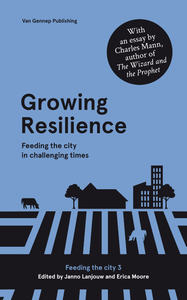
Even in a less eventful year, it’s no easy feat: working to make our food supply healthy and sustainable. But 2020 brought a spate of new challenges. It was the year of Brexit, Black Lives Matter, and the COVID-19 pandemic. A year of hope and loss and solidarity, of masks and worries and Zoom calls. Of infection sweeping through the meatpacking industry and sometimes, of empty supermarket shelves. It was also the year that brought us the glimmering realisation that everything could be different. When so much has changed – how we work, who we spend time with, how far we venture from home – what all might be possible for food and for farming? In Flevo Campus’s latest collection of essays, thirteen journalists, scholars, and thought leaders from the US, the Netherlands, and the UK share insight into the question: How can we build resilience into our food supply – and grow more resilient ourselves? Every year, Flevo Campus publishes the best work on feeding the cities of today and tomorrow. This year’s edition includes essays by Stephen Satterfield, Charles C. Mann, Herman Lelieveldt, Hester Dibbits, Kelly Streekstra, Sigrid Wertheim-Heck, Anke Brons, Joris Lohman, Sebastiaan Aalst, Marian Stuiver, Frank Verhoeven, Emily Whyman, and Lenno Munnikes.
DOCUMENT
During the medieval and early modern periods, the mock sermon was one of the most widely staged festive rituals. There are records of its performance in most European countries and cultures. But despite its clear popularity in England, few of these texts are extant in English. Fewer still have been translated in their entirety. To remedy this situation, we provide here a translation of the sixteenth century Dutch poem Spotsermoen over Sint Niemand. This piece embodies most of the key features of the mock sermon; the text's rhetorical strategies, its content, and the details it reveals about its performance are all typical of the genre. Thus, the poem is offered as a specimen of the mock sermon's overall conventions and forms.
DOCUMENT

Financial constraints and risk taking are two well-established determinants of firm performance, however, no research analyzes how these variables are connected in the context of a high risk environment. Using data from microfinance clients in Tanzania, we derive a novel financial constraints measure and incorporate a psychometric risk taking scale. Results confirm the importance of access to finance and risk attitudes for business development. Also, we provide preliminary evidence for an interaction between financial constraints and risk taking. Financial constraints “throw sand in the wheels” and protect risk taking entrepreneurs from the negative impact of risk taking on microenterprise performance.
DOCUMENT




