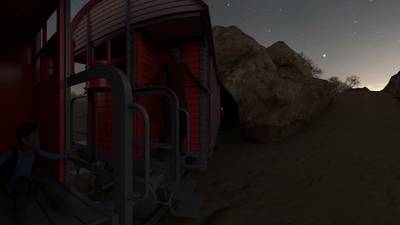
Shima Rezaei Rashnoodi (Project lead Universidad de Monterrey) & Marnix S. van Gisbergen (Project Lead), Felipe Lega (Animation), Guillermo Enrique Lavin Montero (Art).
YOUTUBE

In the BBI-JU project LIBBIO, institutions across Europe researched the opportunities around the Andean Lupin. The business case of the Andean Lupin can be compared to that of the soybean. Using green processing technologies, we can use it for the production of consumer products, food and feed. Learn more about how this can be achieved in this video.
LINK

In the BBI-JU project LIBBIO, institutions across Europe researched the ideal growing circumstances for the Andean Lupin in Europe. The Andean Lupin can be grown across the continent. Continued research improved the crop’s yield and resistance to disease. Learn more about how this can be achieved in this video.
LINK

Presentation about entrepreneurial thinking in games, animation and VFX industries.
DOCUMENT
The European games, animation and VFX industries, along with related educational institutions, are shifting towards sustainable practices due to growing awareness of workforce well-being, however, layoffs and increased interest in these fields has intensified competition in an already saturated job market. This has created contradictory expectations for prospective employees: the ideal employee, an adaptable team player, team-fit, with strong interpersonal skills; but also the ideal applicant, characterised as standout, highly skilled, competitive, and self-promoting. Using Study Demands-Resource Theory, this study examined how educational institutions and emerging talents navigate these contradicting demands. Thematic analyses highlighted the extreme nature of the overall industry, job market and academic demands placed on students, as well as how peer support, messages of reassurance, and well-meant advice can be both resources and stressors. Educational experts and students face critical decisions with significant implications for well-being and career prospects.
DOCUMENT
The European games, animation and VFX industries, along with related educational institutions, are shifting towards sustainable practices due to growing awareness of workforce well-being, however, layoffs and increased interest in these fields has intensified competition in an already saturated job market. This has created contradictory expectations for prospective employees: the ideal employee, an adaptable team player, team-fit, with strong interpersonal skills; but also the ideal applicant, characterised as standout, highly skilled, competitive, and self-promoting. Using Study Demands-Resource Theory, this study examined how educational institutions and emerging talents navigate these contradicting demands. Thematic analyses highlighted the extreme nature of the overall industry, job market and academic demands placed on students, as well as how peer support, messages of reassurance, and well-meant advice can be both resources and stressors. Educational experts and students face critical decisions with significant implications for well-being and career prospects.
DOCUMENT
In the BBI-JU project LIBBIO, institutions across Europe researched the opportunities around the Andean Lupin. The business case of the Andean Lupin can be compared to that of the soybean. Using green processing technologies, we can use it for the production of consumer products, food and feed. Learn more about how this can be achieved in this video.
LINK

PANEURAMA innovation alliance for the creative media sector.
DOCUMENT
The Research Centre of Teaching, Learning & Technology from Inholland University of Applied Sciences is collaborating (2017 - 2021) in the transnational European funded Erasmus+ research project Designing & Evaluating Innovative Mobile Pedagogies (DEIMP). The increasing ubiquity of mobile devices, and ongoing technical developments, are providing educators and learners with exciting new opportunities for supporting their teaching and learning. However, educators struggle to recognize and exploit the pedagogical possibilities of mobile devices and tend to replicate existing pedagogical practice. Researchers of the DEIMP-project are doing research into the principles of innovative mobile pedagogies. The aim of this project is to help educators build knowledge and understanding of innovative mobile pedagogies. In this animation the principles of innovative mobile pedagogies are discussed.
YOUTUBE