High consumption of animal-source foods, specifically meat, adversely affects human health and the environment. Dietary habits are shaped at younger ages and a reduction in meat consumption may be facilitated by the life course transitions in early adulthood, but studies are limited. This study among young Dutch adults aimed to describe their perceptions on the influence of life course transitions on meat consumption, barriers and enablers to reduce meat consumption, and strategies for reducing meat consumption. Barriers and enablers were grouped applying the COM-B model that includes capability, opportunity, and motivation. This quantitative cross-sectional study included a representative sample of 1806 young adults from two Dutch consumer panels who completed an online survey. Young adults frequently reported life course transitions, especially those related to moving house, to have decreased their meat consumption. Barriers and enablers to reduce meat consumption were identified for all three factors of the COM-B model. Important barriers included taste, perceived high prices of meat alternatives, and habits. In contrast, important enablers included care for the environment and animal welfare, enjoyment of smaller portions of meat and saving money. However, barriers and enablers largely differed by groups of meat consumption frequency. Self-perceived effective strategies for reducing meat consumption were price reduction of meat alternatives, recipes for vegetarian meals, and more attractive meat alternatives. The findings of this study are relevant for the development of targeted behaviour-change programmes including interventions in the physical and the social environment (like lowering prices and improving the offer of meat alternatives).
MULTIFILE

Due to a growing challenge to feed the world’s population and an increased awareness to minimize the impact of our food choices on climate change, a more plant-based diet has gained popularity with a growing number of plant-based products on the market. To stimulate a plant-based diet that also improves long-term health, data are needed to monitor whether these products are healthy alternatives to animal-based foods. Therefore, this study inventoried 916 plant-based meat, fish, and dairy alternatives from eight Dutch supermarkets. The nutritional quality of each product was assessed by (1) the Dutch food-based dietary guidelines and (2) the Nutri-Score. The results show that over 70% of meat, fish, and dairy alternatives have an A/B Nutri-Score (indicating high nutritional quality), but do not comply with the Dutch dietary guidelines. This is mainly due to high salt and low vitamin B12 and iron content (meat and fish alternatives) or low protein and calcium levels (dairy alternatives). In conclusion, the majority of plant-based products are nutritionally not full alternatives of the animal-based equivalents; however, there are still opportunities for reformulation. To aid the consumer in making healthy plant-based food choices, a better alignment between the Nutri-Score and the recommended dietary guidelines is needed.
DOCUMENT

LINK
The protein transition from animal towards plant proteins, is driven by the growth of the world’s population combined with a rising standard of living. Over the last five years, this has already resulted in a 7-fold increase in product launches with a plant-based claim or notification. This manuscript gives an overview of current, emerging and future protein sources and their use to replace protein in dairy and meat products as well as egg proteins. Currently, a major focus is on the development of products that mimic the original product the most, for example the best meat alternative. However, the question arises if this is enough to change the overall balance between animal and plant proteins? The outlook discusses the demand for a better understanding of consumer needs and preferences.
LINK
Many consumers express concerns about the welfare of animals in agriculture, but often refrain from purchasing animal‐friendly alternatives that address their concerns. To support consumers in making choices in line with their values and attitudes, this study approaches consumer animal‐friendly product choice as a dilemma between maximising the buyer’s self‐interest and maximising societal interest. To address this social dilemma, we developed and tested positioning strategies that reinforce the animal welfare label with complementary consumption values (functional, emotional, social and epistemic). The results from a choice experiment with Dutch chicken meat shoppers showed that two strategies ‐ emotional and epistemic ‐ effectively increase consumer value perceptions. These insights imply that animal‐friendly products positioned to invoke emotion or curiosity drive consumers towards animal‐friendly product choices, and that these strategies are most effective for consumers who base their choice solely on maximising either self‐interest or societal interest
DOCUMENT
MULTIFILE
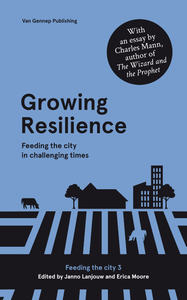
Even in a less eventful year, it’s no easy feat: working to make our food supply healthy and sustainable. But 2020 brought a spate of new challenges. It was the year of Brexit, Black Lives Matter, and the COVID-19 pandemic. A year of hope and loss and solidarity, of masks and worries and Zoom calls. Of infection sweeping through the meatpacking industry and sometimes, of empty supermarket shelves. It was also the year that brought us the glimmering realisation that everything could be different. When so much has changed – how we work, who we spend time with, how far we venture from home – what all might be possible for food and for farming? In Flevo Campus’s latest collection of essays, thirteen journalists, scholars, and thought leaders from the US, the Netherlands, and the UK share insight into the question: How can we build resilience into our food supply – and grow more resilient ourselves? Every year, Flevo Campus publishes the best work on feeding the cities of today and tomorrow. This year’s edition includes essays by Stephen Satterfield, Charles C. Mann, Herman Lelieveldt, Hester Dibbits, Kelly Streekstra, Sigrid Wertheim-Heck, Anke Brons, Joris Lohman, Sebastiaan Aalst, Marian Stuiver, Frank Verhoeven, Emily Whyman, and Lenno Munnikes.
DOCUMENT
The current food environment in The Netherlands is considered obesogenic. Eighty percent of the products in supermarkets are unhealthy. The Wheel of Five is the well-established, science-based Dutch food-based dietary guideline (FBDG) developed to stimulate healthier choices. In addition, simple directions on food packaging, such as front-of-package (FOP) health logos, could also be helpful. However, these tools should be in line with each other, in order not to confuse the consumer. To study this, we evaluated two FOP nutrient profiling systems (NPSs) for their alignment with the Wheel of Five: Choices five-level criteria and Nutri-Score. For this, a small but representative sample of 124 products was selected from the Dutch food composition database (NEVO). For these products, the scores for Choices and Nutri-Score were calculated using the published criteria, whilecompliance with the Wheel of Five was established by using the criteria from Netherlands Nutrition Center (NNC). The Wheel of Five food groups were used to categorize the products. Differences between the Wheel of Five and Choices are smaller than with Nutri-Score, concluding that Choices ismore consistent with the Wheel of Five and might be an attractive alternation for a FOP health logo on the Dutch market.
DOCUMENT

In celebration of the anniversary of the Hanze University and Academy Minerva in the year 2013, the research group Popular culture, Sustainability and Innovation (Centre of Applied Research and Innovation Art & Society) and Academy Minerva presented the first edition of the Energize Festival for sustainable art, design and lifestyle last November. I am happy to present this limited edition catalogue box with inspiring research posters and one minute movies by our students that formed the heart of the Energize Festival Exhibition. However, before informing you in more detail about the content of this box, I would first like to provide you with some background information on the festival’s theme…
DOCUMENT

This publication follows and analysis the proces in the region Westerkwartier in the Netherlands in their effort to built a whole new regionale food chain. In this report there is a remarkeble role for the knowledge instutions on vocational and applied level.
DOCUMENT




