The Sport Empowers Disabled Youth 2 (SEDY2) project encourages inclusion and equal opportunities in sport for youth with a disability by raising their sports and exercise participation in inclusive settings. It was important to ensure that the authentic views, wishes and feelings of youth with a disability regarding inclusion in sport were attained. Therefore, online focus groups were conducted with youth with a disability, their parents and sport professionals in Finland, Lithuania, Portugal and The Netherlands. Seven themes regarding inclusion in sport have been identified from these interviews: having a choice, sense of belonging, everyone can participate, same rights and equality, acknowledge that everyone is unique, inclusion is an ongoing process and terminology (language) is challenging.
DOCUMENT

The Sport Empowers Disabled Youth 2 (SEDY2) project encourages inclusion and equal opportunities in sport for youth with a disability by raising their sports and exercise participation in inclusive settings. It was important to ensure that the authentic views, wishes and feelings of youth with a disability regarding inclusion in sport were attained. Therefore, online focus groups were conducted with youth with a disability, their parents and sport professionals in Finland, Lithuania, Portugal and The Netherlands. During the online EUCAPA 2020 conference the preliminary results of these focus groups were presented.
DOCUMENT

Vaak wordt sport gepositioneerd als ‘de belangrijkste bijzaak in het leven’. De vraag is echter of sport feitelijk voor veel mensen niet veel méér is. Sport is in onze samenleving een heel belangrijke bron van zingeving. Christenen, maar ook moslims en joden, zoeken zingeving vooral in iets dat de mens overstijgt. Maar zingeving kan ook een werelds karakter hebben. Mensen kunnen de betekenis en de waarde van hun leven ook ontlenen aan aardse zaken. Dan blijkt dat voor velen sport het leven zin geeft, omdat via sport belangrijke menselijke waarden gerealiseerd kunnen worden: gezondheid, presteren, genot, samenwerking en gezelligheid. In het verleden werd godsdienst een samenbindende kwaliteit en functie toegedicht in de samenleving. De grote socioloog Émile Durkheim wees erop dat mensen een wezenlijke behoefte hebben om 'deel uit te maken van een groter samenlevingsverband'. Godsdienst heeft in de geschiedenis altijd een belangrijke rol gespeeld in het bevredigen van deze behoefte, aldus Durkheim. De vraag is of sport deze rol (deels) heeft overgenomen. Volgens Ruud Stokvis draagt sport bij aan morele vorming, sociale binding én zingeving. Ook de wereld van de sportmarketing maakt gebruik van het feit dat sport een belangrijke bron voor zingeving is
LINK
Vaak wordt sport gepositioneerd als ‘de belangrijkste bijzaak in het leven’. De vraag is echter of sport feitelijk voor veel mensen niet veel méér is. Sport is in onze samenleving een heel belangrijke bron van zingeving. Christenen, maar ook moslims en joden, zoeken zingeving vooral in iets dat de mens overstijgt. Maar zingeving kan ook een werelds karakter hebben. Mensen kunnen de betekenis en de waarde van hun leven ook ontlenen aan aardse zaken. Dan blijkt dat voor velen sport het leven zin geeft, omdat via sport belangrijke menselijke waarden gerealiseerd kunnen worden: gezondheid, presteren, genot, samenwerking en gezelligheid. In het verleden werd godsdienst een samenbindende kwaliteit en functie toegedicht in de samenleving. De grote socioloog Émile Durkheim wees erop dat mensen een wezenlijke behoefte hebben om 'deel uit te maken van een groter samenlevingsverband'. Godsdienst heeft in de geschiedenis altijd een belangrijke rol gespeeld in het bevredigen van deze behoefte, aldus Durkheim. De vraag is of sport deze rol (deels) heeft overgenomen. Volgens Ruud Stokvis draagt sport bij aan morele vorming, sociale binding én zingeving. Ook de wereld van de sportmarketing maakt gebruik van het feit dat sport een belangrijke bron voor zingeving is
DOCUMENT

Het boekje Kracht van Sport in de Wijk betreft een leesbare weergave van de lezingen die in het voorjaar van 2017 verzorgd zijn over dit thema door externe deskundigen. De onderwerpen van de lezingen zijn samen met vertegenwoordigers uit zowel zorg en welzijn als de sport gekozen. Het betreft de doelgroepen: 1) mensen met een beperking 2) kwetsbare jongeren 3) migranten en vluchtelingen 4) mensen met psychische problemen 5) senioren en ouderen.
DOCUMENT

Little is known about innovation in the non-profit sport sector. The current research addresses this gap by questioning whether and to what extent sport federations innovate. It aims to identify types of innovation implemented by sport federations and their attitude and preferences towards innovation. An online questionnaire was administered to a sample of key representatives (i.e. Chair, Secretary General or Directors) of regional sport federations in Belgium (n = 101; 70% response rate). Directed content analysis of the service innovations described by respondents reveals ten different types of sport and non-sport service innovations. Results suggest that membership size and categories of sport influence preferences in knowledge creation/appropriation, and ultimately the type of innovation developed. This paper also suggests that sport federations are driven by demands by members in meeting their expectations of new services and are not risk averse. On average, the sport federations surveyed have a positive attitude towards newness that favours innovativeness. The current study would help researchers to advance further into the knowledge of service innovation in non-profit organisations. It should act as a foundation for research and practice on specific types of service innovation in sport. Managers should realise the importance of attitude for innovation and use the suggested typology to provide new services in different categories and meet members’ expectations.
LINK
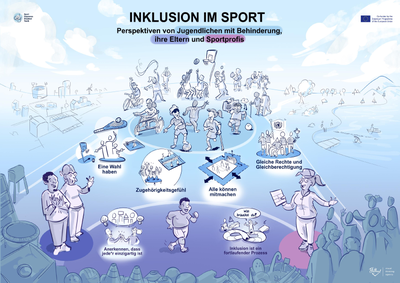
Es war wichtig, die authentischen Ansichten, Wünsche und Empfindungen von Jugendlichen mit Behinderung in Bezug auf Inklusion im Sport zu erhalten. Daher wurden Online-Fokusgruppen mit Kindern und Jugendlichen mit einer Behinderung, ihren Eltern und Expert*innen im Sportbereich in Finnland, Litauen, Portugal und den Niederlanden durchgeführt. Aus diesen Interviews wurden sieben Themen bezüglich Inklusion im Sport identifiziert, die im Folgenden einzeln erläutert werden.
DOCUMENT
Presentation at seminar: What struggles and opportunities do youth face in relation to their participation in sport and physical activities? This question is the starting point of the seminar 'Youth sport participation at the intersection of gender, ethnic and religious identifications' that will be held at Utrecht School of Governance on December 8 2017.
DOCUMENT
The Sport Empowers Disabled Youth 2 (SEDY2) project encourages inclusion and equal opportunities in sport for youth with a disability by raising their sports and exercise participation in inclusive settings. The SEDY2 Inclusion Handbook is aimed at anybody involved in running or working in a sport club, such as a volunteer, a coach, or a club member. The goal of the handbook is to facilitate disability inclusion among mainstream sport providers by sharing SEDY2 project partners’ best practices and inclusive ideas.
DOCUMENT

The ‘Sport Physical Education and Coaching for Health (SPEACH) project, co-financed by the Erasmus+ Programme of the European Union (2015-2017) aims to increase awareness and behavioral change in sport professionals and European citizens towards an active and healthy lifestyle. The target is to develop and test Health Enhancing Physical Activities or HEPA modules that can be integrated in Physical Education Training Education structures and Sport Coaching courses. The different steps in this EU project are: (1) needs analyses among students (survey, interviews, focus groups), (2) development of most relevant HEPA modules based on the needs analysis results, (3) teach-the-teacher course (4) testing of 3 selected HEPA modules in a real-life setting with physical education and sport coaching students (n=60, from 8 countries) and teachers (n=12, from 7 countries), (5) sustainability of the project results, coordinated by the European Network of Sport Education (ENSE). The project is in its last phase (step 6). The titles of the three field-tested modules are (a) Development of a family-based HEPA project in the school & sport club context, (b) Promoting health enhancing physical activity among children and youth, and (c) Designing educational sport environments for children with special needs. The presentation will illustrate how the module on family-based HEPA was build up in content and didactical approach. The students were given the task to work out a health promotion project together with local sport clubs, school(s) and other local organizations. The goal of the intervention was to enhance (and maintain) health with children and make sure that parents are aware of possibilities to integrate PA in daily life for their children and themselves. A stepwise approach in small students groups was worked out concentrating on the themes: insight in stakeholders and their role in health promotion, behavior change theories, motivational interviewing and intervention mapping protocol. Advices for implementation on different educational levels (vocational, bachelor and master) and usefulness at national and international educational contexts will be given for the family-based module and for the project in general. Acknowledgements: this project is co-finance by the Erasmus+ programme of the European Union, 557083-EPP-1-2014-1-NL-SPO-SCP) Keywords: health policy, family-based intervention, school and sport club context, teacher training, sport coaching courses,
DOCUMENT



