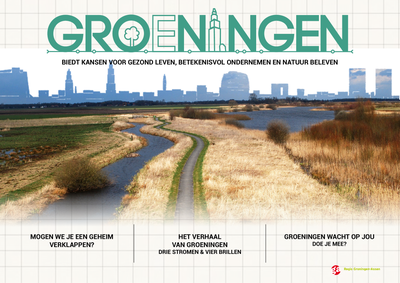
Fraeylemaborg is a noble house in an earthquake-stricken area of the Netherlands due to the induced seismicity events in the region. The structure is located in the middle of the town of Slochteren which gave its name to the largest gas field in the world upon its discovery in 1959. The gas extraction has caused small-magnitude shallow earthquakes during the last decade, damaging not only the residential inventory but also the historical structures in the area. The main building of Fraeylemaborg sits on an artificial island surrounded by water channels, rendering the problem of earthquake response even more complicated. A small part of the main structure on the island was built in the 14th century, while the construction of additional parts and morphological alterations had taken place until the 18th century. The structure has been subjected to several small magnitude earthquakes causing damages on the load bearing system. An extensive renovation and repair of damages took place in recent years, however the latest seismic events imposed again damage to the structure. This paper presents a project of monitoring, assessment and diagnosis of problems for the Fraeylemaborg, the most important “borg” of the region, underlining the particularities of the induced seismicity problem. The FE model has been calibrated by using ambient vibration tests. Combination of earthquake and soil settlement loads have been applied on the calibrated model. The paper develops scenarios that help in explaining the reasons behind the damages on this structure during the recent shallow and low-magnitude induced seismicity earthquakes.
LINK
I was somewhat surprized with the fog in Groningen upon my arrival. This is notthe fog that covers the beautiful landscapes of the northern Netherlands in theevening and in the early morning. No… It is the fog that obscures the real aspectsof the earthquake problem in the region and is crystallised in the phrase “Groningen earthquakes are different”, which I have encountered numerous times whenever I raised a question of the type “But why..?”. A sentence taken out of the quiver as the absolute technical argument which mysteriously overshadows the whole earthquake discussion.Q: Why do we not use Eurocode 8 for seismic design, instead of NPR?A: Because the Groningen earthquakes are different!Q: Why do we not monitor our structures like the rest of the world does?A: Because the Groningen earthquakes are different!Q: Why does NPR, the Dutch seismic guidelines, dictate some unusual rules?A: Because the Groningen earthquakes are different!Q: Why are the hazard levels incredibly high, even higher than most Europeanseismic countries?A: Because the Groningen earthquakes are different!and so it keeps going…This statement is very common, but on the contrary, I have not seen a single piece of research that proves it or even discusses it. In essence, it would be a difficult task to prove that the Groningen earthquakes are different. In any case it barricades a healthy technical discussion because most of the times the arguments converge to one single statement, independent of the content of the discussion. This is the reason why our first research activities were dedicated to study if the Groningen earthquakes are really different. Up until today, we have not found any major differences between the Groningen induced seismicity events and natural seismic events with similar conditions (magnitude, distance, depth, soil etc…) that would affect the structures significantly in a different way.Since my arrival in Groningen, I have been amazed to learn how differently theearthquake issue has been treated in this part of the world. There will always bedifferences among different cultures, that is understandable. I have been exposed to several earthquake engineers from different countries, and I can expect a natural variation in opinions, approaches and definitions. But the feeling in Groningen is different. I soon realized that, due to several factors, a parallel path, which I call “an augmented reality” below, was created. What I mean by an augmented reality is a view of the real-world, whose elements are augmented and modified. In our example, I refer to the engineering concepts used for solving the earthquake problem, but in an augmented and modified way. This augmented reality is covered in the fog I described above. The whole thing is made so complicated that one is often tempted to rewind the tape to the hot August days of 2012, right after the Huizinge Earthquake, and replay it to today but this time by making the correct steps. We would wake up to a different Groningen today. I was instructed to keep the text as well as the inauguration speech as simple aspossible, and preferably, as non-technical as it goes. I thus listed the most common myths and fallacies I have faced since I arrived in Groningen. In this book and in the presentation, I may seem to take a critical view. This is because I try to tell a different part of the story, without repeating things that have already been said several times before. I think this is the very reason why my research group would like to make an effort in helping to solve the problem by providing different views. This book is one of such efforts.The quote given at the beginning of this book reads “How quick are we to learn: that is, to imitate what others have done or thought before. And how slow are we to understand: that is, to see the deeper connections.” is from Frits Zernike, the Nobel winning professor from the University of Groningen, who gave his name to the campus I work at. Applying this quotation to our problem would mean that we should learn from the seismic countries by imitating them, by using the existing state-of-the-art earthquake engineering knowledge, and by forgetting the dogma of “the Groningen earthquakes are different” at least for a while. We should then pass to the next level of looking deeperinto the Groningen earthquake problem for a better understanding, and alsodiscover the potential differences.
DOCUMENT

Noorderbreedte besteedt in ieder nummer aandacht aan onderzoek van studenten landschapsgeschiedenis van de Rijksuniversiteit Groningen. Deze keer geen student, maar professor Yme Kuiper. Hij doet sinds 2012 als hoogleraar onderzoek naar historische buitenplaatsen en landgoederen.
DOCUMENT

This paper aims to quantify the cumulative damage of unreinforced masonry (URM) subjected to induced seismicity. A numerical model based on discrete element method (DEM) has been develop and was able to represented masonry wall panels with and without openings; which are common typologies of domestic houses in the Groningen gas field in the Netherlands. Within DEM, masonry units were represented as a series of discrete blocks bonded together with zero-thickness interfaces, representing mortar, which can open and close according to the stresses applied on them. Initially, the numerical model has been validated against the experimental data reported in the literature. It was assumed that the bricks would exhibit linear stress-strain behaviour and that opening and slip along the mortar joints would be the predominant failure mechanism. Then, accumulated damage within the seismic response of the masonry walls investigated by means of harmonic load excitations representative of the acceleration time histories recorded during induced seismicity events that occurred in Groningen, the Netherlands.
DOCUMENT

Bij het Erfgoedlab Hanze ontmoeten de erfgoedpraktijk, onderwijs en studenten elkaar. Er worden opdrachten beschikbaar gesteld (cases en kennisvragen) en er worden excursies en lezingen georganiseerd. In deze bundel staan de projecten, activiteiten, opbrengsten en publicaties beschreven.
DOCUMENT
The first two fases of the BUBO methode (Bottom Up Business Opportunities)
DOCUMENT

De provincie Groningen heeft HanzePro gevraagd om een verkenning te doen naar de stand van zaken binnen de restauratiebranche in Groningen, met aandacht voor onderwijs, arbeidsmarkt en innovaties. Het doel van de verkenning is om te komen tot een realistisch en gezamenlijk beeld van de huidige situatie en wat vervolgens nodig is om de restauratiebranche in de provincie Groningen toekomstbestendig te maken. In het voorliggende rapport is de verkenning en haar uitkomsten beschreven.
DOCUMENT

In de periode september 2019 tot april 2020 heeft HanzePro SOFE in opdracht van de provincie Groningen een verkenning uitgevoerd naar de restauratiebranche in de provincie Groningen. De thema’s onderwijs, arbeidsmarkt en innovaties stonden daarbij centraal. Het doel van de verkenning was om te komen tot een gedragen beeld van de huidige situatie en wat vervolgens nodig is om de restauratiebranche in de provincie Groningen toekomstbestendig te maken. Op 13 juli 2020 is het rapport van de verkenning door HanzePro opgeleverd.Het doel van dit verdiepend onderzoek is om in beeld te brengen wat voor de onderdelen Erfgoedlab en Kennisdatabase nodig is om deze initiatieven succesvol te realiseren.
DOCUMENT