It is essential to consider the social context when designing sustainable energy systems that lead to successful implementation in neighbourhoods. Current methods often only consider techno-economic aspects and are insufficiently capable of including social factors, because they are unclear about which social factors are relevant and how they can be quantified. This paper explores how neighbourhoods can be characterized socially by studying pre-existing neighbourhood characteristics, focussed on socio-economic status and social cohesion. The paper is built around four case-studies in the Netherlands, which are analysed both quantitatively and qualitatively. The paper shows how the social context can be defined by 1) proposing a theoretical framework of social factors, 2) quantifying these social factors by survey research, 3) interpretating this data using qualitative casestudy data and 4) quantifying success in the cases and relating this to the scores of the survey data. The results of this explorative study will 1) show how a social profile can be used to find leads for a participative approach towards sustainable neighbourhoods where techno-economic solutions are well embedded in the social context and 2) help to understand and predict success of participation in communities.
DOCUMENT
In Europe, green hydrogen and biogas/green gas are considered important renewable energy carriers, besides renewable electricity and heat. Still, incentives proceed slowly, and the feasibility of local green gas is questioned. A supply chain of decentralised green hydrogen production from locally generated electricity (PV or wind) and decentralised green gas production from locally collected biomass and biological power-to-methane technology was analysed and compared to a green hydrogen scenario. We developed a novel method for assessing local options. Meeting the heating demand of households was constrained by the current EU law (RED II) to reduce greenhouse gas (GHG) emissions by 80% relative to fossil (natural) gas. Levelised cost of energy (LCOE) analyses at 80% GHG emission savings indicate that locally produced green gas (LCOE = 24.0 €ct kWh−1) is more attractive for individual citizens than locally produced green hydrogen (LCOE = 43.5 €ct kWh−1). In case higher GHG emission savings are desired, both LCOEs go up. Data indicate an apparent mismatch between heat demand in winter and PV electricity generation in summer. Besides, at the current state of technology, local onshore wind turbines have less GHG emissions than PV panels. Wind turbines may therefore have advantages over PV fields despite the various concerns in society. Our study confirms that biomass availability in a dedicated region is a challenge.
DOCUMENT

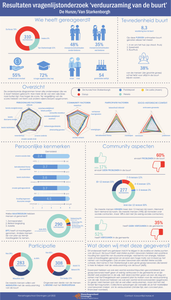
Grafische samenvatting van de onderzoeksresultaten.
DOCUMENT
“Municipal Youth Work taken over by Christians”. (Binnenlands Bestuur, 2009) This heading refers to the work of Youth for Christ in an Amsterdam neighbourhood. This organisation, successful in Youth Work nationwide, last year came out first in an open competition of the Amsterdam district De Baarsjes. Because of this they were commissioned to undertake all the youth work in this multicultural neighbourhood. The conditions were not to evangelise and not to limit recruitment of personnel inside their own circle but to recruit from outside the organisation as well. When they later appeared to have put a job advertisement only on their own website, this led to heated debates. Finally Youth for Christ acknowledged and rectified this mistake. This example is a concrete illustration of the actual and sometimes delicate relationships between philosophy of life and social work
DOCUMENT

In Amsterdam, the phenomenon of overcrowding is increasing, and tourism is one of the causes. Both the public debate and the municipal authorities are pointing to an increasing need for more expertise and knowledge regarding ways of achieving a healthy balance for various stakeholders. This article focuses on the stakeholder role of city residents and discusses their attitudes to tourists and tourism-related developments in their own neighbourhood and in the rest of the city. The term “attitude” can be divided into three components: feeling, behaviour and thinking. The results of this study are based on both quantitative and qualitative fieldwork (surveys and semi-structured interviews) and on desk research. It can be concluded that, for the most part, residents have a positive attitude to tourists and tourism. Differences in attitude are mostly determined by the city district where respondents live and by personal feelings and thinking. Follow-up research in the coming years will examine the complexity of the issue of overcrowding in more depth.
DOCUMENT

The sharing economy holds promise for the way we consume, work, and interact. However, consuming in the sharing economy is not without risk, as institutional trust measures (e.g. contracts, regulations, guarantees) are often absent. Trust between sellers and buyers is therefore crucial to complete transactions successfully. From a buyer ́s perspective, a seller ́s profile is an important source of information for judging trustworthiness, because it contains multiple trust cues such as a reputation score, a profile picture, and a textual self-description. The effect of a seller’s self-description on perceived trustworthiness is still poorly understood. We examine how the linguistic features of a seller’s self-description predict perceived trustworthiness. To determine the perceived trustworthiness of 259 profiles, 189 real buyers on a Dutch sharing platform rated their trustworthiness. The results show that profiles were perceived as more trustworthy if they contained more words (which could be an indicator of uncertainty reduction), more words related to cooking (indicator of expertise), and more words related to positive emotions (indicator of enthusiasm). Also, a profile’s perceived trustworthiness score correlated positively with the seller’s actual sales performance. These findings indicate that a seller’s self-description is a relevant signal to buyers, eventhough it is cheap talk (i.e. easy to produce). The results can guide sellers on how to self-present themselves on sharing platforms and inform platform owners on how to design their platform so that it enhances trust between platform users.
DOCUMENT
City authorities worldwide have sought to rejuvenate and diversify their tourism product offerings by dispersing visitors into less familiar and frequented locales. Despite calls to understand such ‘new tourism areas’ (NTAs) in urban areas, few researchers have examined visitor responses to the implementation of NTA strategies, particularly outside Europe. This quantitative approach considers the profiles, attitudes and behaviours of NTA visitors in an Asian city that was undertaking dispersal efforts pre-pandemic in the context of mass inbound Chinese visitation. Distinct profiles are found for NTA visitors relative to other city arrivals in response to Hong Kong’s branding propositions. It is found that NTAs appeal to repeat visitors seeking cosmopolitan experiences and may help tourist dispersal and product differentiation, though the proposition that NTA visitors are more highly educated was not supported
LINK
Train today’s students for tomorrow’s jobs and let today’s professionals develop themselves alongside the progress in their field - these are the two most urgent demands we need and want to meet in vocational education. However, the world is changing so rapidly that the focus of Universities of Applied Sciences (UAS) only on the design of initial education is no longer enough. Education must connect with industry, governments, NGOs and population in a more intensive and permanent manner.In the Northern Netherlands, in particular in the city of Groningen, higher and secondary vocational education are aware of this urgency. Therefore, knowledge institutions have innovatively developed formal partnerships with industry, governments, population and social organisations in their field. What stands out most is the cooperative model in which education institutions, local governments, citizens and entrepreneurs steadily collaborate within a single organisation, a new type of company. This is a business model where education and research cooperate with hundreds of companies, civil society organisations and social organisations in the city and the region. Each level has its own form: a Regional Cooperative for the region and a Community Cooperative for the neighbourhood. In this brochure we would like to introduce you to these forms of collaboration.
DOCUMENT






