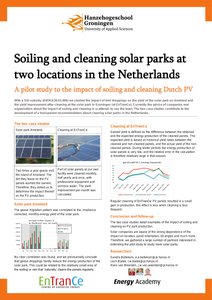
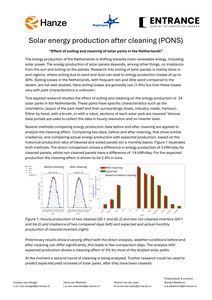
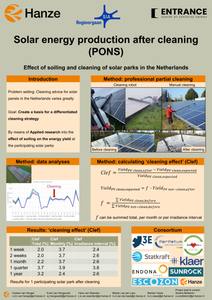
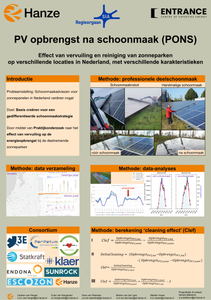
Wat is de opbrengst van het schoonmaken van zonneparken?
DOCUMENT
Citizen participation in local renewable energy projects is often promoted as many suppose it to be a panacea for the difficulties that are involved in the energy transition process. Quite evidently, it is not; there is a wide variety of visions, ideologies and interests related to an ‘energy transition’. Such a variety is actually a precondition for a stakeholder participation process, as stakeholder participation only makes sense if there is ‘something at stake’. Conflicting viewpoints, interests and debates are the essence of participation. The success of stakeholder participation implies that these differences are acknowledged, and discussed, and that this has created mutual understanding among stakeholders. It does not necessarily create ‘acceptance’. Renewable energy projects often give rise to local conflict. The successful implementation of local renewable energy systems depends on the support of the local social fabric. While at one hand decisions to construct wind turbines in specific regions trigger local resistance, the opposite also occurs! Solar parks sometimes create a similar variation: Various communities try to prevent the construction of solar parks in their vicinity, while other communities proudly present their parks. Altogether, local renewable energy initiatives create a rather chaotic picture, if regarded from the perspective of government planning. However, if we regard the successes, it appears the top down initiatives are most successful in areas with a weak social fabric, like industrial areas, or rather recently reclaimed land. Deeply rooted communities, virtually only have successful renewable energy projects that are more or less bottom up initiatives. This paper will first sketch why participation is important, and present a categorisation of processes and procedures that could be applied. It also sketches a number of myths and paradoxes that might occur in participation processes. ‘Compensating’ individuals and/or communities to accept wind turbines or solar parks is not sufficient to gain ‘acceptance’. A basic feature of many debates on local renewable energy projects is about ‘fairness’. The implication is that decision-making is neither on pros and cons of various renewable energy technologies as such, nor on what citizens are obliged to accept, but on a fair distribution of costs and benefits. Such discussions on fairness cannot be short cut by referring to legal rules, scientific evidence, or to standard financial compensations. History plays a role as old feelings of being disadvantaged, both at individual and at group level, might re-emerge in such debates. The paper will provide an overview of various local controversies on renewable energy initiatives in the Netherlands. It will argue that an open citizen participation process can be organized to work towards fair decisions, and that citizens should not be addressed as greedy subjects, trying to optimise their own private interests, but as responsible persons.
DOCUMENT

Videoverslag waarin de aanpak, maatschappelijke relevantie en belangrijkste uitkomsten van het RAAK Onderzoek 'Making GREEN Energy Sources Greener' worden besproken. In dit onderzoek is op verschillende drijvende zonneparken gekeken naar effecten van de installaties op waterkwaliteit en ecologie. De resultaten hiervan vormen aanleiding voor vervolgonderzoeken die inmiddels zijn gestart
YOUTUBE

Drijvende zonneparken komen steeds vaker voor. Het grootste van Europa bevindt zich in Zwolle. Hier is onderzoek gedaan naar het effect van de drijvend panelen op de waterkwaliteit en het leven in het water. De eerste resultaten tekenen zich af: op deze locatie en installatie vrijwel geen effecten op het zuurstofgehalte onder de drijvende energiefabriek.
DOCUMENT
Column over het naar Scandinavisch voorbeeld maken van een plan voor de export van Nederlandse kennis en kunde op het gebied van duurzame energie
DOCUMENT
De USA heeft al vier staten met meer dan dertig procent windenergie in hun elektriciteitsmix. In Europa haalt alleen Denemarken dat niveau. In de meer zonnige streken in de USA verschijnen in rap tempo uitgestrekte zonneparken. Dit jaar produceert de USA per inwoner een kwart meer elektriciteit uit wind en zon dan Nederland. En terwijl de CO2-emissie in Europa de afgelopen jaren is gestegen, noteerde de USA een dalende trend.
LINK