This PhD research project is about how Dutch development NGOs use social media for their development projects. For this, the following research question has been investigated: how do Dutch development NGOs use social media to further the development activities of their organisations? The purpose of this study is to understand how development NGOs are trying to get to grips with social media. Given the exploratory nature of this research, a qualitative research approach was adopted. Both case studies and the grounded theory method were used for this study. This combination is ideal because with a case study one tries to understand, or explore a phenomenon, whereas, in grounded theory studies, one tries to build theory. Given that this study is concerned with how Dutch development NGOs perceive social media for their development projects, an interpretive paradigm seems appropriate. The grounded theory methodology for this research is consistent with the epistemology of interpretivism. The combination of case study research and grounded theory works well for theory building and has been applied in Information Systems and ICT for Development studies before. As the use of theory before data collection is in opposition to the principle idea of the grounded theory methodology, in which theory emerges from the data, this needs to be addressed when combining case studies and grounded theory. This issue was resolved by using an initial highlevel conceptual framework as a guiding instrument for both the noncommittal literature research and for the conceptualisation of the research problem, whilst not distorting the emergence of theory from the data. This study focuses on formally organised development NGOs who receive funding from the Dutch Ministry of Foreign Affairs for their development projects. From the approximately 100 organisations, fourteen NGOs were selected for this study. The choice of fourteen NGOs was driven by a theoretical sampling strategy. Data was collected via semi-structured interviews with 18 respondents and field-notes of meetings or events of 14 development NGOs. The data was analysed using the Glaserian coding procedure of grounded theory, starting with open coding, followed by selective coding, and ending with theoretical coding. Three major themes (or core categories as they are called in the grounded theory method), were identified. This study's first contribution is captured in the theme ‘NGO Enacting Values in Development’. This is about how an organisation’s values are enacted in the context of international development. The organisational mixture of development mind-sets influences organisational activities in development. The ideological trends that are stimulated by societal and technological changes have an impact on the organisation’s development strategy and the strategic collaboration network of development NGOs. The second contribution of this study is captured in the theme ‘NGO’s Views on Social Media Use’. This core category discusses the organisation’s view on the meaning of social media and includes the four following categories: technological, individual, collective and contextual views attributed to organisational social media. The four categories empirically demonstrate the concept of affordance clusters and the connections between them. The study’s third contribution is captured in the theme ‘NGO’s Use of Social Media in Development’, encompassing the social media activities of the studied development NGOs in their development projects. This has led to an assessment framework of organisational social media use by development NGOs, constructed by cross-referencing the organisational goals of development NGOs to the social media activity areas in the context of development. These themes represented by three core categories are inter-related. Feedback loops between NGO’s values in development, views on social media, and the actual uses of social media for development purposes have been discerned. This grounded theory study aims to build an initial theory of how NGOs might approach the use of social media in a development context. This qualitative study has produced some new concepts. This study has led to a substantive theory in the context of international development. Furthermore, this substantive theory is compared with three theory lenses, when applied on the data collected for this PhD research, in their ability to identify similar concepts as reached with the substantive theory following the grounded theory method. Finally, the thesis presents some avenues for future research that may help expand the substantive theory that has been developed under this research to formal theory
LINK
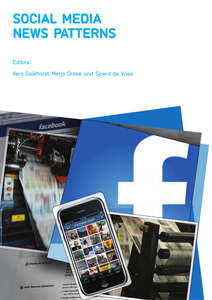
Wereldwijd onderzoek: Hoe gebruiken nieuwsmedia social media? Jongeren lezen geen krant meer, ze kijken op hun smartphone die ze altijd bij de hand hebben. Binnen het lectoraat social media en reputatiemanagement van NHL hogeschool te Leeuwarden heeft een groep internationale studenten in 12 landen onderzoek gedaan. Hierbij hebben ze meer dan 150 social media sites bestudeerd van nieuws media. De resultaten maken deel uit van een internationaal onderzoek van NHL Hogeschool en Haaga Helia University. De onderzoeksvraag was: Wat speelt zich af in de nieuwsmedia? Persbureaus kunnen het overzicht gebruiken om hun social media te optimaliseren. En voor ieder die journalistiek een warm hart toedraagt is het interessante informatie over de nieuwsmedia in een overgangssituatie (2nd edition)
DOCUMENT
We present an evaluation of tools for assessing the impact of AI in the Dutch media sector. Our evaluation of the ECP AIIA tool shows the need for clear guidelines in the adoption of various AI applications within Dutch media organisations. We conclude that the adoption of impact assessment tools, such as the ECP AIIA, is not held back by common media practice, but rather by commercial considerations.
DOCUMENT
In this paper we discuss the general approach and choices we made in developing a prototype of a social media monitor. The main goal of the museum monitor is to offer museum professionals and researchers better insight in the effects of their own social media usage and compare this with other actors in the cultural heritage sector. It gives researchers the opportunity to consider communication within the sector as whole. In the research project “Museum Compass” we have developed a prototype of a social media monitor, which contains data of current and historic online activities on Facebook, Twitter, YouTube, Foursquare and Flickr of all registered Dutch museums. We discuss – mostly in a practical sense – our approach for developing the monitor and give a few examples as a result of its usage.
DOCUMENT

PurposeThe purpose of this paper is to emphasise the importance for libraries to address the issue of media literacy in the internet age. The library must claim its key expert role in the field of literacy. The library can function as a platform and playground for consuming and producing media content.Design/methodology/approachResearch has been carried out on theory, policy and practice in the field of media literacy. The paper provides an overview of ideas on new skills and competences that should be taught to make people media‐literate.FindingsThe paper shows that attention on the issue of media literacy is increasing. Academics and political institutions alike stress the importance of media literacy for participation in society and full citizenship. Libraries must claim their expert position in this field as various organisations outside the library have initiated projects and products on media literacy in recent years.Practical implicationsLibrary management should develop policies on media literacy and personnel should be trained in essential media literacy skills. Collaboration and knowledge sharing in media literacy between libraries and other organisations are essential.Originality/valueThe paper provides a brief overview of theory and policy on media literacy.
DOCUMENT
This study examines how news organisations in the Netherlands respond to public complaints in an online environment.
DOCUMENT
The goal of this study is to identify the perspectives that development NGOs attribute to organisational social media, and furthermore elaborate on an appropriate categorisation of these perspectives for social media use by development NGOs. How social media is used in the area of development, where the use goes far beyond the private sector purpose of publicity and converting a sale, is a key issue for NGOs. Fourteen development NGOs from the Netherlands that are actively using social media were selected for this study. Interviews were conducted to collect data from the decision makers and practitioners in these organisations. The grounded theory method combined with a multiple case study was applied for data analysis. The resulting preliminary framework presents us with four emerging perspectives, namely Technological, Individual, Collective and Contextual perspectives attributed to organisational social media use. We theorise that there are relationships between these four perspectives. This paper suggests that the understanding of (organisational) social media use among development NGOs can be better understood by identifying these perspectives and their inter-relationships. The implications of these findings for the literature on affordances and organisational social media use in the context of development and NGOs are discussed. Recommended Citation Sheombar, Anand; Urquhart, Cathy; Kayas, Oliver; and Ndhlovu, Tidings, "Social Media and Development: Understanding NGO practices and perceptions" (2018). GlobDev 2018. 3. https://aisel.aisnet.org/globdev2018/3
DOCUMENT
This longitudinal, quantitative study contributes to the debate on technology-based professional development by examining the extent to which a learning (LinkedIn) intervention in a university setting affects an individual’s social media use for professional development, and the extent to which this relates to self-reported employability. In addition, we investigated how this relationship is moderated by an individual’s motivation to communicate through social media (LinkedIn). Based on social capital theory and the conservation of resources theory, we developed a set of hypotheses that were tested based on longitudinal data collected from university employees (N = 101) in middle- and high-level jobs. First, in line with our expectations, social media use for professional development was significantly higher after the learning intervention than before. Second, partially in line with our expectations, social media use for professional development was positively related with the employability dimension anticipation and optimization. Third, contrary to our expectations, motivation to communicate through social media (LinkedIn) did not have a moderating role in this relationship. We concluded that the learning intervention has the potential to foster social media use for professional development, and in turn, can contribute to individuals’ human capital in terms of their employability. Hence, the intervention that forms the core of this empirical research can be a sustainable and promising human resource management (HRM) practice that fits the human capital agenda.
DOCUMENT

The 'Media Battle' is a concept for a competitive one-week pressure-cooker contest, in which students develop a creative product for companies or other organisations. It brings together education, research and professional practice, with benefits for all parties involved. We guide participating organisations to develop a detailed problem description ensuring that descriptions are sufficiently clear and focused for students to work on during a week. Students spend the week developing their concept such that it can be pitched to their client organisation. Students are trained in pitching and are coached in developing creative concepts. Several groups have the same client. On the last day, clients select their favourite concept, while a jury selects a winner among the concepts of different clients. Most concepts are further developed in 'regular courses', while some concepts, usually the winning ones, are subject of further development in the curriculum. In this article we will describe our experiences with media battles and discuss critical success and failure factors.
DOCUMENT

In this report Piet Bakker, professor of Cross Media Content, mapped the state of the media in the Netherlands.
LINK



